Dental Implants
Explore dental implants in Palo Alto, including candidacy, treatment planning, healing and long-term maintenance. Dr. Sharma can help you understand your options.
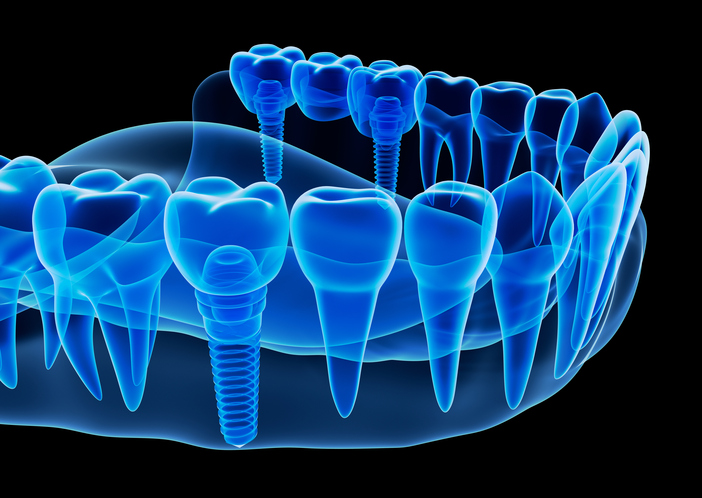
Dental implants are one way to replace missing teeth. The implant itself is a small titanium or titanium-alloy fixture placed in the jawbone to act as an artificial tooth root. After healing, it can support a crown, bridge or denture depending on how many teeth are being replaced.
What are the parts of a dental implant?
A typical implant restoration has three components: the implant in the bone, an abutment that connects to the implant and the visible replacement tooth or prosthesis. The exact design depends on the clinical situation.
Who may be a candidate for dental implants?
Implant treatment begins with an evaluation of the gums, remaining teeth, bite and available bone. Health history, medications, smoking or nicotine use, history of gum disease and the location of important anatomical structures can also affect planning and prognosis.
Some patients have enough bone for implant placement without additional procedures. Others may benefit from bone grafting or a different restorative approach. Implant treatment is generally planned after facial growth is complete.
What does the implant process involve?
The sequence varies. Treatment may include removal of a nonrestorable tooth, grafting when indicated, implant placement, a healing period and then fabrication of the final restoration. In selected cases some steps can be combined. In others, allowing additional healing time is the more predictable approach.
Are implants better than bridges or dentures?
Not automatically. An implant can replace a missing tooth without preparing adjacent teeth and can provide excellent stability for certain restorations. A dental bridge or denture may make more sense in other situations. The condition of neighboring teeth, bone, gums, bite, cost and treatment time all matter.
How long do dental implants last?
Implants can function for many years, but they are not maintenance free and no implant is guaranteed for life. The restoration attached to an implant may eventually need repair or replacement. The tissues around an implant can also develop inflammation or bone loss, especially when plaque control is poor or risk factors are present.
How do you care for a dental implant?
Daily plaque removal and professional maintenance remain important. The exact home care tools depend on whether the implant supports a single crown, bridge or denture. Learn more about caring for dental implants.
Dental implant consultation in Palo Alto
Dr. Sharma can evaluate the missing tooth area, review the appropriate imaging and discuss implant treatment alongside other reasonable options. When surgical or specialty care is indicated, we can coordinate that care as part of the treatment plan.
Request an appointment to discuss replacing a missing tooth.
