Root Canal Treatment
Learn when root canal treatment may be needed, what the procedure does and what to expect afterward. Dr. Sharma can evaluate your tooth and discuss the right next step.
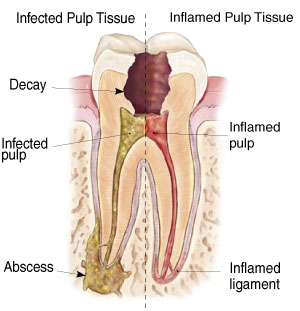
Root canal treatment is used to preserve a tooth when the pulp inside it becomes irreversibly inflamed or infected. The problem may begin with deep decay, a crack, trauma or a previous restoration. The goal is to remove the affected pulp tissue, clean and disinfect the canal system and seal the space so the tooth can remain in function.
When might a root canal be needed?
Symptoms that can lead to a root canal evaluation include lingering sensitivity to hot or cold, pain with biting, spontaneous tooth pain, swelling, a pimple-like area on the gum, deep decay or a cracked tooth. Not every toothache requires root canal treatment, so diagnosis comes first.
What happens during treatment?
The tooth is numbed with local anesthetic. An opening is made into the tooth so the inflamed or infected pulp can be removed. The canals are then cleaned, shaped, disinfected and filled. A temporary or permanent restoration is placed to seal the tooth.
Root canal treatment addresses the diseased pulp, but it does not make a weakened tooth stronger by itself. Teeth that need endodontic treatment are often structurally compromised from decay, cracks or previous dental work. For many back teeth, a dental crown or another protective restoration is recommended afterward.
Is a root canal painful?
Modern root canal treatment is performed with local anesthesia. The condition that led to treatment may be painful, but the procedure itself should be well controlled. Mild tenderness for a few days afterward is common. Increasing pain, significant swelling or a return of symptoms should be evaluated.
How long does treatment take?
The number and length of visits depend on the tooth, its anatomy and the severity of the infection. Some cases can be completed in one visit while others require additional treatment or referral to an endodontist.
Root canal or extraction?
If a tooth is restorable, keeping the natural tooth may avoid the need for an implant, bridge or removable replacement. In other situations, a severe crack, inadequate tooth structure or poor periodontal support may make extraction the better option. The decision should be based on the prognosis of the individual tooth.
Evaluation at Palo Alto Oral Health
Dr. Sharma can evaluate the tooth, review the appropriate imaging and discuss whether root canal treatment is indicated. If specialist care would be preferable, we can coordinate a referral to an endodontist.
Request an appointment if you are experiencing persistent tooth pain, swelling or sensitivity.
