
Teeth whitening can brighten a smile in a matter of days or weeks, so it is natural to wonder how long that brighter shade will stay. Many people want to know whether whitening is permanent, how often it might need to be repeated and what they can do to keep the results looking fresh.
The honest answer is that whitening does not come with a fixed expiration date. How long it lasts depends on the type of staining you started with, the treatment used and your daily habits. This guide explains what the evidence and the American Dental Association (ADA) say, and what you can do to help your results last.
How long does teeth whitening last?
There is no single number that applies to everyone. The ADA's patient and professional resources on whitening describe how treatments work, what they can and cannot change and what side effects to expect, but they do not list a set number of months or years that results last.
Research offers some perspective. A 2026 retrospective study in the Journal of Clinical Medicine reviewed records of 50 patients who had in-office bleaching with high-concentration hydrogen peroxide gels. At 18 months, color change remained within a clinically acceptable range, and most product groups showed no significant color regression. One of the five products did show a significant decrease over that time. This was a single-center study of one type of treatment, so it cannot predict how long your own results will last, but it suggests that professional whitening can remain stable for well over a year in many people.
Is teeth whitening permanent?
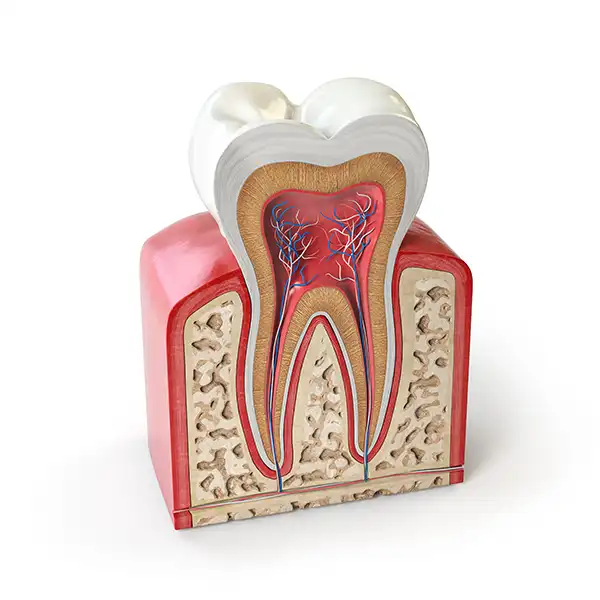
Whitening lightens the natural color of the tooth, but your teeth continue to be exposed to the same things that caused staining in the first place. According to MouthHealthy, the ADA's patient site, coffee, tea and red wine are some major staining culprits, and the tar and nicotine in tobacco create stubborn stains. Teeth can also darken gradually with age, because the outer enamel layer gets thinner over time and more of the yellowish dentin underneath shows through.
Because of this, it is more accurate to think of whitening as a result you maintain rather than a one-time permanent change.
What affects how long whitening results last?
Several factors can influence both how well whitening works and how long it seems to last:
- The type of stain. The ADA explains that discoloration can be extrinsic, meaning colored compounds that build up on the enamel surface, or intrinsic, meaning stains inside the enamel or the dentin beneath it. Some stains are a combination of both.
- The starting shade. MouthHealthy notes that yellow teeth will probably bleach well, brown teeth may not respond as well, and teeth with gray tones may not bleach at all.
- The cause of the discoloration. Whitening also may not be effective when discoloration is caused by certain medications or by an injury to the tooth.
- Your daily habits. Frequent coffee, tea, red wine or tobacco use can bring staining back sooner.
- The treatment itself. In-office whitening, custom trays from your dentist and over-the-counter products differ in strength and approach, and results can vary between products.
Does whitening work on crowns, veneers or fillings?
No. The ADA states that only natural teeth can be whitened, not tooth-colored restorations, because restorative materials generally do not change color. MouthHealthy also notes that whitening will not work on caps, veneers, crowns or fillings. If you have restorations on front teeth, this is worth discussing with your dentist before you start, since whitened natural teeth may no longer match existing dental work.
Do whitening toothpastes keep teeth white?
Whitening toothpastes work differently from bleaching products. The ADA explains that they rely mainly on abrasives to remove surface stains, and MouthHealthy notes that, unlike bleaches, these products do not change the color of teeth. They may help with everyday surface staining between treatments. If you use one, MouthHealthy recommends looking for products that have earned the ADA Seal of Acceptance for stain removal.
Is sensitivity after whitening normal?
Some people notice tooth sensitivity during or after whitening. MouthHealthy says that in most cases the sensitivity is temporary. The ADA describes it as typically mild and transient, and for strip or tray-based treatments it notes that sensitivity usually resolves by the fourth day after treatment. Gum irritation can also occur and is typically transient, resolving shortly after treatment ends.
More whitening is not always better. MouthHealthy cautions that overuse of whiteners can damage tooth enamel or gums. If sensitivity is severe, lasts longer than expected or keeps returning, stop and talk with your dentist.
How can you help your whitening results last?
Simple daily habits make a real difference. MouthHealthy recommends:
- Brushing your teeth twice a day for two minutes.
- Limiting foods and drinks that stain teeth, like coffee, tea and red wine.
- Not smoking or using tobacco.
- Seeing your dentist regularly for checkups and cleanings.
It is also wise to skip do-it-yourself whitening tricks. MouthHealthy warns that the acid in lemons and other fruits can wear away enamel, that there is no evidence charcoal products are safe or effective for teeth, and that overly abrasive materials can actually make teeth look more yellow.
When should you talk to a dentist about whitening?
The ADA recommends a clinical exam before starting tooth bleaching, and MouthHealthy advises talking to your dentist before you begin. An exam helps identify what kind of staining you have, whether a tooth has darkened for a reason that needs attention and whether whitening is likely to give you the result you want. A single tooth that has darkened on its own, or any discoloration that is changing or worsening, deserves an evaluation.
If you are considering whitening in Palo Alto, you can learn more about teeth whitening at Palo Alto Oral Health, or book an appointment to talk through your options with our team.
Sources
American Dental Association: Whitening
American Dental Association, MouthHealthy: Teeth Whitening
American Dental Association, MouthHealthy: Natural Teeth Whitening
This article provides general education and does not replace an individual dental examination or diagnosis.