If you are missing a tooth, or your dentist has talked with you about an implant, one of the first questions is usually how long it will last. An implant takes planning, healing time and a commitment to care, so it makes sense to want a clear picture of what to expect.
The short answer is that implants have a strong track record in research, but they are not guaranteed for life and they still need regular care. This guide explains what an implant is, what studies show about how long implants tend to last, what can shorten their life and how to help yours stay healthy.
What is a dental implant?
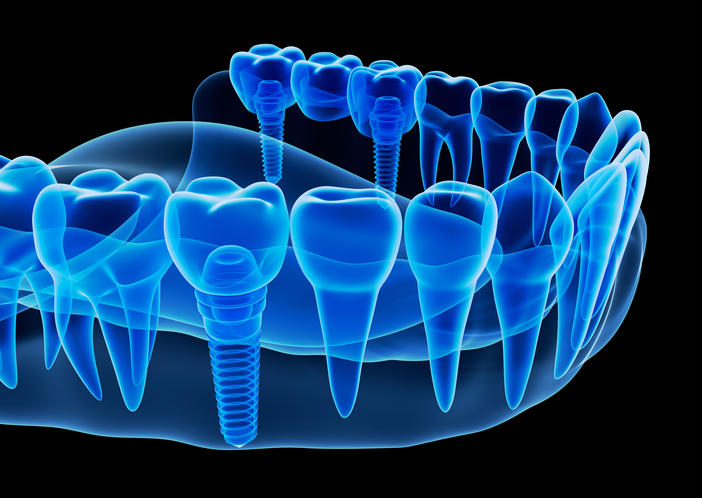
The American Dental Association (ADA) describes implants as posts that are surgically placed in the upper or lower jaw, where they function as a sturdy anchor for replacement teeth. They are made of titanium and other materials that are compatible with the human body.
An implant restoration usually has more than one part: the implant in the bone, a connector called an abutment and the visible crown, bridge or denture on top. When people ask how long an implant lasts, they are often asking about two different things. One is whether the implant itself stays in the bone. The other is whether the tooth attached to it holds up over time.
How long do dental implants usually last?
There is no single number that applies to everyone, but long-term research is encouraging.
- A 2019 systematic review in the Journal of Dentistry pooled 18 prospective studies of adults with modern implant systems. It estimated that 96.4% of implants were still in place after 10 years. When the authors adjusted for patients who dropped out of the studies, the estimate was 93.2%.
- A 2024 meta-analysis in Clinical Oral Investigations looked at studies that followed implants for 20 years. The authors concluded that about four out of five implants were still in place at 20 years. They also rated the quality of that evidence as very low, mainly because many patients were lost to follow-up over such a long period.
In other words, most implants in these studies lasted at least a decade, and many lasted much longer. The research cannot promise how long any one person's implant will last, which is why ongoing checkups matter.
Does the crown on an implant last as long as the implant?
Not always. A 2012 systematic review in Clinical Oral Implants Research looked at single crowns supported by implants. It estimated that 95.2% of the implants were still in place at 10 years, while 89.4% of the crowns on those implants were still in place over the same period.
The same review found that the most common technical problem within five years was a loosened screw, followed by issues such as a crown coming loose or a chip in the porcelain. These problems can often be repaired, but they are a reminder that the visible tooth may need attention or replacement even when the implant underneath is stable.
What can shorten the life of an implant?
Implant problems tend to have more than one cause. The 2024 meta-analysis noted that the studies it reviewed did not agree on a single main cause of implant loss. Factors reported in individual studies included smoking, diabetes, teeth grinding and shorter implants. The 2019 review found that implant loss may be more likely in older age groups.
Gum and bone health around the implant is a major part of the picture. The American Academy of Periodontology (AAP) describes two related conditions:
- Peri-implant mucositis is inflammation limited to the soft tissue around an implant. The AAP notes that it may be reversible if caught early.
- Peri-implantitis involves inflammation along with loss of the bone that supports the implant. The AAP notes that it usually requires surgical treatment.
The AAP lists a history of gum disease, poor plaque control, smoking and diabetes as risk factors for these conditions. The ADA also notes that tobacco use can slow healing and that chronic illnesses such as diabetes may interfere with healing after surgery.
How can you help your implant last longer?
The gums and bone around an implant still need daily care. The AAP notes that implants require regular brushing and flossing along with regular checkups, and that implants should be monitored routinely as part of a periodontal evaluation.
Helpful habits include:
- Brushing twice a day with a soft-bristled brush and an ADA-accepted fluoride toothpaste, as the ADA recommends
- Cleaning between your teeth and around the implant once a day, using the tools your dental team suggests for your type of restoration
- Keeping up with regular dental visits so the implant, crown and surrounding gums can be checked
- Talking with your dentist if you grind or clench your teeth, since a night guard may be recommended
- Avoiding tobacco and working with your physician to manage conditions such as diabetes
What signs mean an implant should be checked?
The AAP lists red or tender gums around an implant and bleeding when brushing as signs of peri-implant disease. Contact your dentist if you notice:
- Gums around an implant that are red, swollen, tender or bleeding
- A crown or bridge on an implant that feels loose or moves
- A chip, crack or rough edge on the implant crown
- Pain or a change in how your bite feels
These signs do not always mean an implant is failing, but they are worth having examined. Anything that is persistent or getting worse should be checked rather than waiting for your next routine visit.
Talking about implants in Palo Alto
An implant can be a reliable long-term way to replace a tooth when it is carefully planned and well maintained. At Palo Alto Oral Health, we can examine the area, check any implants you already have and talk through whether an implant or another option fits your needs. You can learn more about our dental implant treatment, call (650) 321-9693 or request an appointment.
Sources
American Dental Association, MouthHealthy: Implants
American Academy of Periodontology: Peri-Implant Diseases
American Dental Association, MouthHealthy: Brushing Your Teeth
American Dental Association, MouthHealthy: Teeth Grinding
This article provides general education and does not replace an individual dental examination or diagnosis.