If you have been told you need a root canal, one of the first practical questions is how much time it will take. You may be planning around work, school or family, and it helps to know how many visits to expect and how long recovery usually lasts.
The short answer is that most root canals are completed in one or two appointments, followed by a separate visit to restore the tooth. This guide walks through what happens at each step, what affects the timeline and what healing typically looks like afterward.
How long does a root canal take?
The American Association of Endodontists (AAE) says most root canals can be done in one to two appointments, and that each appointment lasts roughly 90 minutes. The American Dental Association (ADA) similarly notes that root canal treatment usually takes one or two office visits to complete.
These are general estimates. Your own appointment may be shorter or longer depending on the tooth and its condition, so your dentist or endodontist can give you a more specific idea after examining it.
What happens during a root canal appointment?
Knowing the steps can make the time in the chair feel more predictable. According to the ADA and AAE, treatment generally includes:
- Examination and x-rays to get a clear view of the tooth and the surrounding bone.
- Local anesthetic to numb the tooth and the area around it so you are comfortable.
- A dental dam, a thin protective sheet placed over the tooth to keep it dry and clean during treatment.
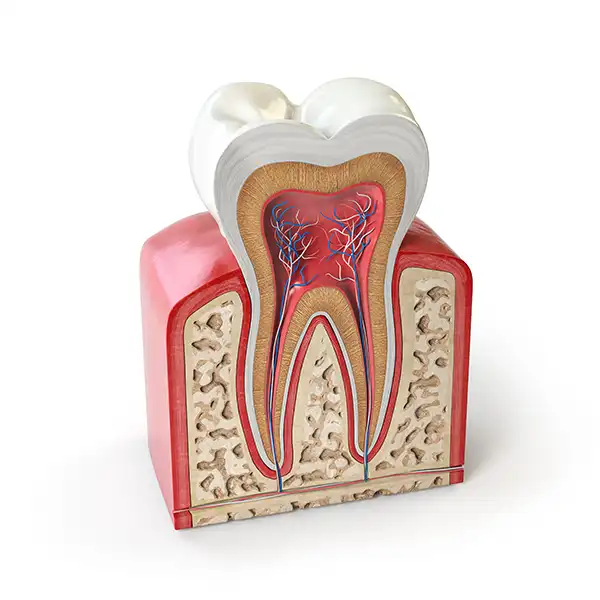
- Cleaning the inside of the tooth. A small opening is made in the top of the tooth, the inflamed or infected pulp is removed, and the inside of the tooth and each canal is cleaned and disinfected.
- Filling and sealing the canals with a rubber-like material, usually gutta-percha, to help protect against future infection.
- A temporary filling to close the opening until the tooth receives its final restoration.
Why do some root canals take two visits?
The AAE explains that whether treatment takes one or two appointments depends on the condition of your tooth and your personal circumstances. The AAE also notes that molars are more difficult to treat than some other teeth. Your dentist will explain why a particular plan is recommended for your tooth.
Do you need another appointment after the root canal?
Yes, in most cases. The root canal itself treats the inside of the tooth, but the tooth still needs a lasting restoration on top. The ADA notes that a follow-up visit is needed to remove the temporary filling and replace it with a regular filling or a crown. In some cases, a post may be placed in the root canal to help support a crown.
The AAE advises that you should not chew or bite on the treated tooth until it has been restored by your dentist. Keeping this follow-up visit helps protect the tooth after treatment. You can read more about this step on our dental crown page.
How long does numbness last after a root canal?
The AAE says patients will likely be numb for about 2 to 4 hours after the procedure, and it advises against eating until the numbness is completely gone. Once the numbness wears off, the AAE notes you can generally eat and drink normally, while still avoiding chewing on the treated tooth until it is restored.
According to the AAE, most patients are able to return to school or work directly following a root canal.
How long does it take to heal from a root canal?
Some tenderness is common as the area settles. The AAE says your tooth may feel slightly sore for a few days after treatment while the area heals, and that in the majority of cases, symptoms improve within three to five days. The ADA likewise notes that the tooth and the area around it may feel sensitive for a few days.
If you are uncomfortable during this time, talk with your dentist about how to relieve the discomfort. If an infection had spread, your dentist may also prescribe an antibiotic, which should be taken exactly as directed.
When should you call your dentist after a root canal?
Mild soreness that gradually improves is expected. The AAE recommends contacting your provider if pain is severe, worsens, or lasts more than a few days. It is also a good idea to call if you notice new swelling. Any symptom that is persistent or getting worse deserves an examination.
How can you help your treated tooth last?
The ADA notes that with proper care, a restored tooth can last a lifetime. Everyday habits matter here:
- Brush twice a day for two minutes with fluoride toothpaste.
- Clean between your teeth once a day.
- Keep your appointment for the final filling or crown.
- See your dentist regularly so the tooth can be checked over time.
Planning your root canal in Palo Alto
Every tooth is different, so the most reliable estimate of how long your treatment will take comes from an exam and x-rays of that specific tooth. If you have lingering sensitivity to hot or cold, pain when biting or swelling near a tooth, an evaluation can help clarify what is going on and what your options are.
You can learn more about root canal treatment at Palo Alto Oral Health, or book an appointment with our Palo Alto team to have a tooth evaluated.
Sources
American Association of Endodontists: Root Canal Explained
American Association of Endodontists: What Is a Root Canal?
American Dental Association, MouthHealthy: Root Canals
This article provides general education and does not replace an individual dental examination or diagnosis.