Most toothaches are a dental problem that can wait a day or two for an appointment. A toothache with a fever is different. It can mean an infection is no longer staying inside the tooth, and it deserves prompt attention, ideally the same day.
Can a toothache cause a fever?
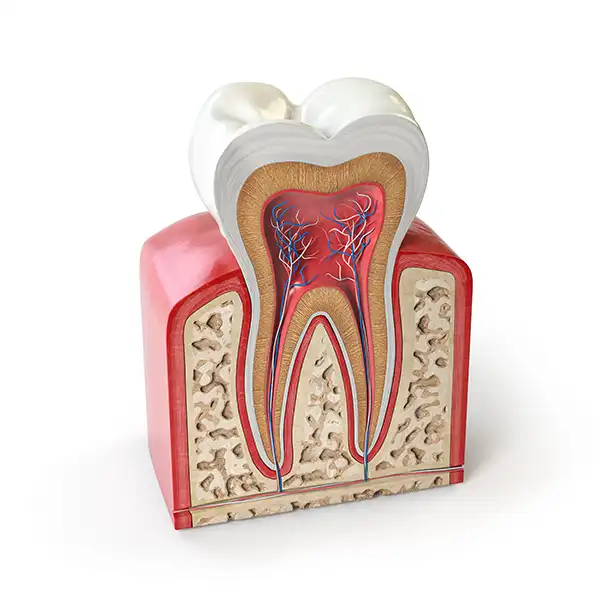
Tooth pain by itself does not cause a fever. An infected tooth can. When bacteria reach the pulp inside a tooth through deep decay, a crack or a leaking filling, the body may form an abscess: a pocket of infection at the tip of the root or in the surrounding gum. A fever, along with swelling, a bad taste or swollen glands in the neck, suggests your body is fighting an infection that may be spreading beyond where it started.
What other symptoms point to a tooth infection?
- Constant, throbbing pain that may spread to the ear, jaw or neck
- Pain when biting or chewing
- Sensitivity to hot or cold that lingers after the food or drink is gone
- Swelling of the gum, cheek or jaw
- A pimple-like bump on the gum that may drain fluid
- A bitter or salty taste or persistent bad breath
- Tender, swollen lymph nodes under the jaw
When is a toothache with a fever an emergency?
Go to an emergency room or call 911 if you have:
- Swelling that makes it hard to breathe, swallow or speak
- Swelling spreading toward your eye or down your neck
- A high fever, confusion or you feel very unwell
These can be signs of a serious spreading infection that needs hospital care. If you have a toothache and a fever without those warning signs, call a dentist the same day. A dental abscess does not resolve on its own.
What can I do while I wait to be seen?
- Take an over the counter pain reliever exactly as directed on the label. For adults who can take them safely, the American Dental Association recommends ibuprofen or naproxen, with or without acetaminophen, as first choice options for dental pain.
- Rinse gently with warm salt water (about half a teaspoon of salt in a glass of warm water) and spit it out.
- Do not place aspirin on the tooth or gum. It can burn the tissue.
- Chew on the other side and avoid very hot, cold or sweet foods.
- Do not try to pop or drain a swelling yourself.
Will antibiotics fix a tooth infection?
Antibiotics may be part of care when an infection is spreading or you have a fever, but they do not remove the source of the problem. The infected tooth still needs treatment, usually root canal treatment to save it, or extraction when it cannot be predictably restored. Without treating the cause, the infection commonly comes back.
What happens at an urgent dental visit?
Your dentist will ask about your symptoms and health history, examine the area, check for swelling and take the X-rays needed to find the source. Depending on what is found, treatment may begin that day to relieve pressure and remove the infection, with a plan to restore the tooth afterward. If the infection is severe, your dentist may coordinate with a specialist or physician.
Urgent toothache care in Palo Alto
If you have a toothache with a fever in Palo Alto, Menlo Park, Los Altos or nearby, call Palo Alto Oral Health at (650) 321-9693. Our office is at 2875 Middlefield Road in Palo Alto. You can learn more on our urgent dental care page or request an appointment.
Sources
ADA News: Guideline on Managing Dental Pain
This article provides general education and does not replace an examination. If you think you are having a medical emergency, call 911.