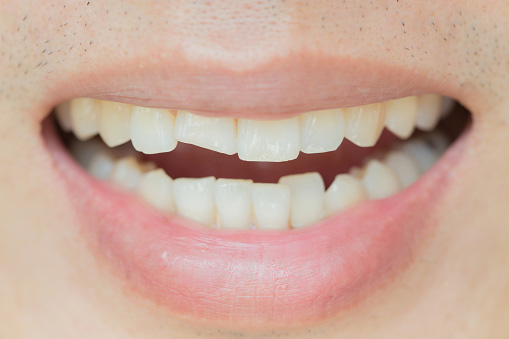
A cracked tooth can be obvious after an injury, but many cracks are much harder to identify. Pain may come and go, especially with chewing or temperature changes, and the tooth can look normal from the outside.
Common types of cracks
- Craze lines: shallow enamel lines that are common in adults and usually do not cause pain.
- Fractured cusp: a piece of the chewing surface breaks, often around a large filling.
- Cracked tooth: a crack extends from the chewing surface toward the root while the tooth is still in one piece.
- Split tooth: the crack has progressed until the tooth separates into distinct segments.
- Vertical root fracture: a crack begins in the root and can be difficult to detect until the surrounding gum or bone becomes inflamed.
What does a cracked tooth feel like?
Possible symptoms include sharp or inconsistent pain with chewing, pain when biting pressure is released and sensitivity to hot or cold. Some cracks cause little or no discomfort at first.
How is a cracked tooth diagnosed?
Diagnosis can require a combination of history, bite testing, careful visual examination, magnification, transillumination and dental imaging. X-rays are useful for many dental problems, but a crack itself may not always be visible on a routine image.
How is it treated?
Treatment depends on the type and depth of the crack. A fractured cusp may be restored with a filling or crown. If a crack reaches the pulp, root canal treatment and a crown may be considered. If a crack extends too far below the gumline or the tooth has split, the tooth may not be saveable.
Do not wait for the crack to heal
Unlike a broken bone, a cracked tooth does not knit back together. Early evaluation can improve the chance of preserving the tooth and can help prevent the crack from progressing.
Learn more about dental crowns and root canal treatment.