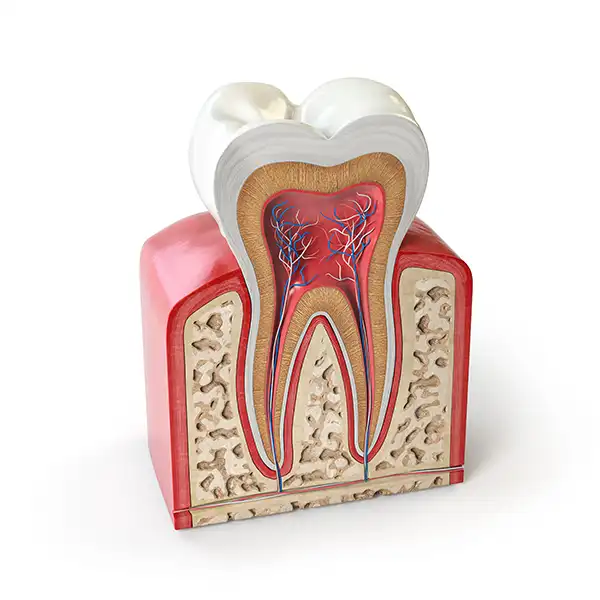
Root canal treatment has accumulated more mythology than almost any other dental procedure. The basic purpose is straightforward: when the pulp inside a tooth becomes irreversibly inflamed or infected, treatment removes the affected tissue, cleans and disinfects the canal system and seals the space so the tooth can often be retained.
Myth: A root canal should be extremely painful
The condition that leads to a root canal may be very painful. The procedure itself is performed with local anesthesia, and many patients are surprised that the experience is similar to other routine restorative dental treatment. Some soreness afterward can occur.
Myth: Root canal treatment makes a tooth stronger
Root canal treatment does not strengthen a tooth. It treats the diseased pulp and helps preserve the tooth. Teeth that require root canal treatment are often already structurally compromised by decay, cracks or previous dental work, which is why a crown or another protective restoration is frequently recommended afterward.
Myth: Extracting the tooth is always simpler
Sometimes extraction is appropriate, but saving a restorable natural tooth can avoid the need to replace it with an implant, bridge or removable prosthesis. The right choice depends on the tooth's restorability, periodontal support, crack pattern and the patient's overall treatment plan.
What symptoms can lead to a root canal evaluation?
Severe pain with biting, lingering sensitivity to hot or cold, swelling, a pimple-like area on the gum, deep decay or a cracked tooth can all prompt an evaluation. Symptoms alone do not determine the treatment; the diagnosis comes from the examination and appropriate imaging or testing.
Are root canals safe?
Yes. Claims that properly performed root canal treatment causes systemic disease are not supported by credible scientific evidence. In 2026, the American Association of Endodontists again updated its evidence-based safety information to address persistent misinformation on this topic.
Learn more about root canal treatment and dental crowns at Palo Alto Oral Health.
Sources
American Association of Endodontists: Root Canal Treatment
American Association of Endodontists: 2026 Root Canal Safety Fact Sheet