
If you have been told you need a "deep cleaning" at your next dental visit, it is natural to have questions. How is it different from a regular cleaning? Is it really necessary? Will it hurt?
A deep cleaning, known in dentistry as scaling and root planing, is a treatment for gum disease. This guide explains what it involves, why it may be recommended, what recovery is usually like and how to protect your gums afterward.
What is a deep cleaning?
The American Dental Association (ADA) describes scaling and root planing as a deep cleaning below the gumline used to treat gum disease. It has two parts:
- Scaling removes plaque and tartar from the teeth above and below the gumline, all the way down to the bottom of each pocket.
- Root planing smooths the tooth roots so the gums can reattach to the teeth.
The American Academy of Periodontology (AAP) adds that smoothing the root surface helps keep plaque and bacterial toxins from sticking to it again.
How is a deep cleaning different from a regular cleaning?
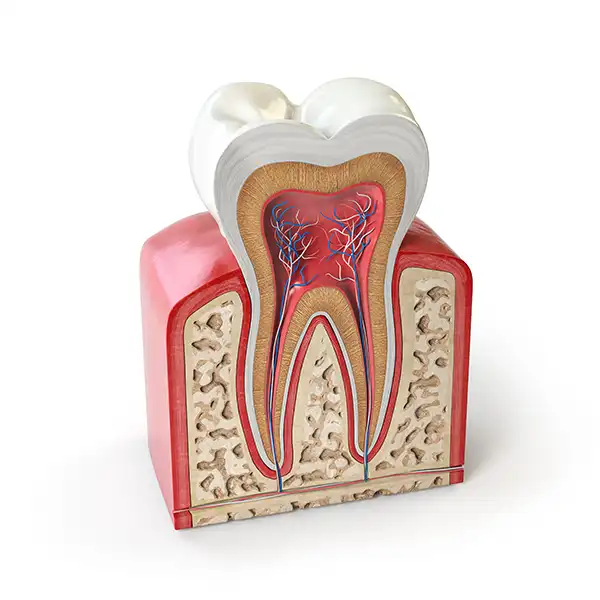
A routine professional cleaning is part of preventive care for healthy gums. A deep cleaning is a treatment. It focuses on the spaces, or pockets, that can form between the gums and teeth when gum disease is present.
According to the ADA, plaque bacteria can inflame the gums and cause them to pull away from the teeth. Plaque then collects in these pockets, where regular brushing cannot remove it. The National Institute of Dental and Craniofacial Research (NIDCR) notes that once plaque hardens into tartar, only a dental professional can remove it. A deep cleaning is designed to reach those areas below the gumline.
Why would I need a deep cleaning?
Gum disease is an infection of the tissues that hold your teeth in place. It is common. The Centers for Disease Control and Prevention (CDC) reports that about 4 in 10 U.S. adults 30 years or older had some level of periodontitis, the more advanced form of gum disease, in 2009 to 2014.
Gum disease is often painless in its early stages, which is one reason regular exams matter. The NIDCR lists signs that may point to gum disease, including:
- Red, swollen or tender gums
- Gums that bleed easily
- Gums that pull away from the teeth, making teeth look longer
- Loose or sensitive teeth
- Pain when chewing
- Bad breath that does not go away
To check for gum disease, a dentist or hygienist examines the gums, measures the pockets around each tooth with a small probe and may take X-rays to look for bone loss. A deep cleaning may be recommended when those pockets are too deep to keep clean with a regular cleaning and home care alone.
Is a deep cleaning really necessary?
It depends on what your exam shows. The ADA notes that when gum disease is caught early and the structures below the gumline are not damaged, a professional cleaning may be enough. When pockets have formed, a deep cleaning may be the appropriate next step.
Leaving gum disease untreated carries real risks. The ADA explains that it can lead to loss of bone and teeth. The CDC notes that periodontitis cannot be reversed, but it can be slowed down and managed with professional treatment.
Scaling and root planing is a well established first step. In a 2015 clinical practice guideline, an ADA expert panel recommended it as the initial nonsurgical treatment for chronic periodontitis, finding a moderate benefit that outweighed potential adverse effects.
If you are unsure about a recommendation, it is reasonable to ask your dentist to show you your pocket measurements or X-rays and explain what they mean for you.
What happens during a deep cleaning?
According to the ADA, scaling and root planing may take more than one visit and may require a local anesthetic to keep you comfortable. Your dentist or hygienist cleans each affected area down to the bottom of the pocket and then smooths the root surfaces.
In some cases, your dentist may also prescribe a mouth rinse or pill, or place medication directly into a cleaned pocket. The ADA notes that these may be used to help prevent infection, control pain or aid healing. Whether any of these are appropriate depends on your situation.
Does a deep cleaning hurt, and what is recovery like?
Comfort during the procedure is usually managed with local anesthetic. Afterward, the ADA says it is common to have some pain for a day or two and tooth sensitivity for up to a week. Your gums may also be swollen, tender and bleed a little while they heal.
If discomfort is getting worse rather than better, or you notice swelling that spreads, fever or other concerns, contact your dental office.
What happens after a deep cleaning?
A follow up visit is usually scheduled to check how your gums are healing. The ADA notes that your dentist will measure the pockets again at that visit. If pockets have become deeper, more treatment may be needed.
The AAP notes that many patients do not need additional treatment after scaling and root planing, but most will need ongoing maintenance care to keep their gums healthy. The NIDCR adds that advanced cases may sometimes require surgery.
How can I keep my gums healthy afterward?
Daily care at home makes a real difference. The ADA and NIDCR recommend:
- Brushing twice a day with a soft toothbrush and fluoride toothpaste
- Cleaning between your teeth every day with floss, an interdental brush, a pick or a water flosser
- Eating a balanced diet
- Avoiding all forms of tobacco
- Keeping up with regular dental checkups and cleanings
Tobacco deserves special mention. The NIDCR identifies tobacco use as the most significant risk factor for gum disease and notes that it can slow healing and reduce the success of treatment. Diabetes, genetics, stress and hormonal changes can also play a role.
Deep cleaning and gum care in Palo Alto
If your gums bleed when you brush, look swollen or seem to be pulling away from your teeth, a dental exam is the best way to find out what is going on. Early attention often means simpler care.
Learn more about periodontal care at Palo Alto Oral Health, or request an appointment to have your gums evaluated.
Sources
American Dental Association, MouthHealthy: Scaling and Root Planing for Gum Disease
National Institute of Dental and Craniofacial Research: Periodontal (Gum) Disease
Centers for Disease Control and Prevention: About Periodontal (Gum) Disease
American Academy of Periodontology: Non-Surgical Treatments
This article provides general education and does not replace an individual dental examination or diagnosis.